A bowing foundation wall can be concerning, especially when you notice the wall moving inward, developing horizontal cracks, or bulging in the middle. While some foundation cracks are minor, a wall that is visibly bowing can indicate pressure or movement that needs to be evaluated.
So, why is your foundation wall bowing?
In many cases, the problem is related to pressure from the soil outside the foundation. Water, poor drainage, changing soil conditions, and the age or condition of the foundation can all contribute to this pressure.
The good news is that a bowing foundation wall does not always mean the entire foundation needs to be replaced. Depending on the condition of the wall and the amount of movement, different repair and stabilization methods may be available.
What Is a Bowing Foundation Wall?
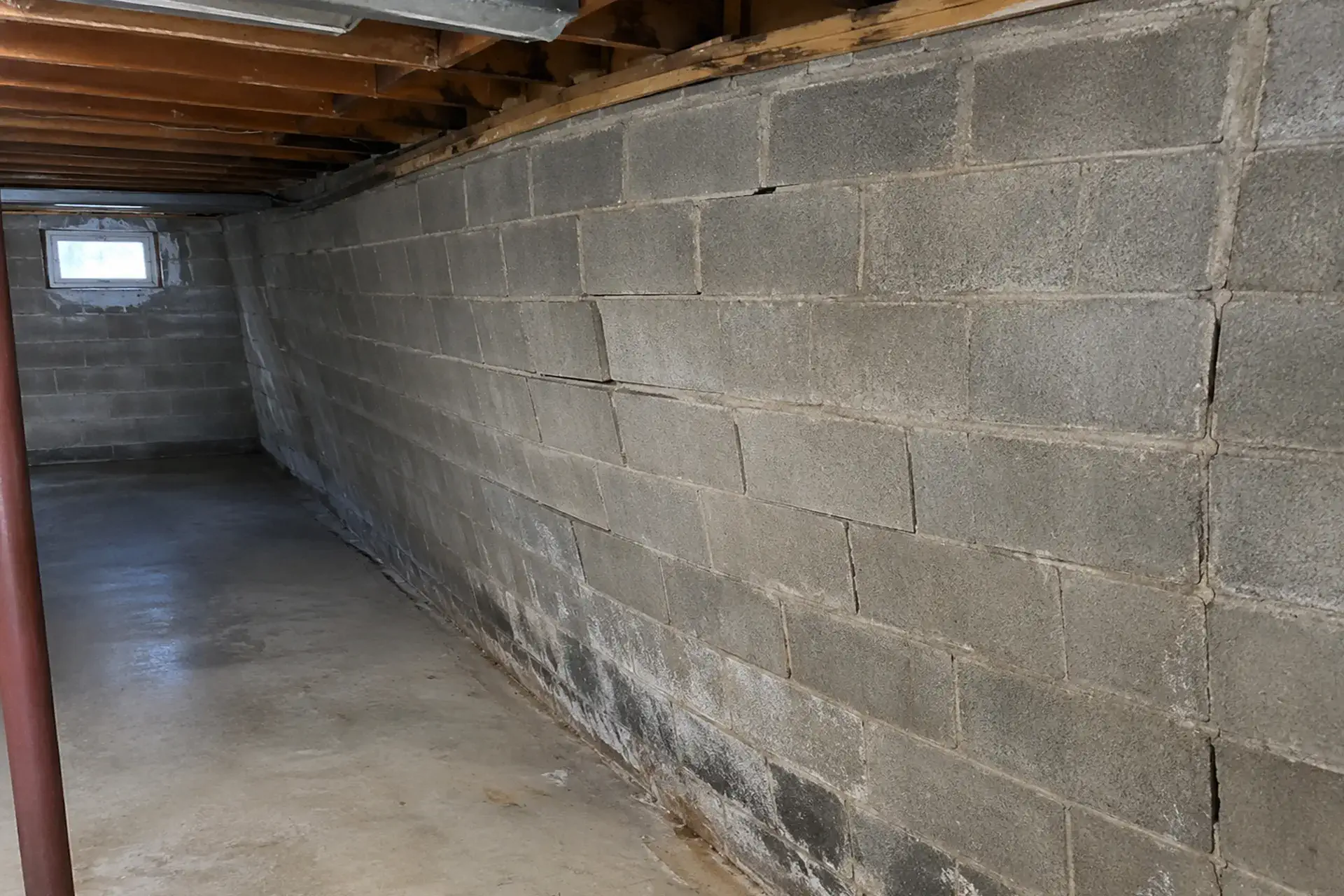
A bowing foundation wall is a foundation wall that has moved inward toward the basement or crawl space. Instead of remaining straight, part or all of the wall may curve, bulge, or lean.
Foundation bowing can happen gradually. A homeowner may first notice a small horizontal crack and later see that the wall has started to move or curve.
Bowing can occur in concrete, concrete block, or masonry foundation walls. The type of foundation and the amount of movement are important when determining the right repair approach.
A bowing wall should be evaluated based on more than the appearance of a single crack. The cause of the movement and whether it is continuing are also important.
What Causes Foundation Walls to Bow?
Several conditions can put pressure on a foundation wall. Understanding the cause is an important part of determining how a bowed foundation wall should be repaired.
Soil Pressure
Soil outside your foundation constantly pushes against the foundation walls. Normally, the wall is designed to handle this pressure.
Problems can develop when the pressure becomes greater than the wall can handle.
Wet soil can become heavier and place additional pressure against the foundation. Changes in soil conditions can also contribute to movement around the foundation.
Over time, this pressure can cause a foundation wall to crack, bow, or move inward.
Water and Hydrostatic Pressure
Water is another common factor in foundation movement.
When rainwater or groundwater collects around the foundation, it increases the pressure against the outside of the wall. This is known as hydrostatic pressure.
If water cannot drain away properly, the pressure can continue to build.
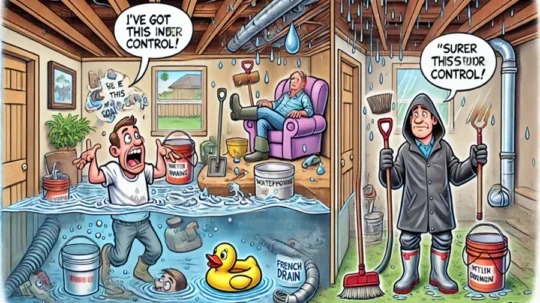
This is one reason drainage should be considered when evaluating a bowing foundation wall. Stabilizing the wall may address the structural movement, but if water continues to create excessive pressure outside the foundation, the underlying conditions should also be addressed.
Poor Foundation Drainage
Drainage problems can allow water to collect around foundation walls.
Common drainage issues include:
- Poor grading around the home
- Clogged or damaged drainage systems
- Gutters that are not working properly
- Downspouts that discharge too close to the foundation
- Water collecting near the foundation after rain
Improving drainage can help reduce water-related pressure around the foundation.
Changing Soil Conditions
Soil does not always remain in the same condition. Changes in moisture can cause some soils to expand and contract.
Seasonal changes, heavy rainfall, and prolonged dry periods can all affect the soil around a home.
When the soil moves or changes volume, it can place additional stress on the foundation.
Age and Deterioration
Older foundation walls may become more vulnerable to movement as materials deteriorate over time.
Mortar joints can weaken, concrete can deteriorate, and previous cracks or repairs may affect the condition of the wall.
The age of the foundation does not automatically mean it will bow. However, older foundations should be evaluated based on their actual condition.
What Are the Signs of a Bowing Foundation Wall?
A bowing foundation wall may show several warning signs.
Horizontal Foundation Cracks
Horizontal cracks are one of the signs that can occur when pressure is pushing against a foundation wall.
A horizontal crack does not automatically mean that a wall is severely damaged. However, a horizontal crack combined with visible bowing or displacement deserves attention.
The Wall Is Curving Inward
A visible curve or inward movement is one of the clearest signs of foundation bowing.
You may notice that the center of the wall is farther into the basement than the top or bottom of the wall.
Bulging Foundation Wall
Some walls develop a noticeable bulge in one section.
The bulging may be easier to see when looking down the length of the wall or using a straight reference point.
Cracks That Are Getting Larger
A crack that changes over time may indicate ongoing movement.
If you notice that a foundation crack is becoming wider, longer, or accompanied by new cracks, it is worth having the condition evaluated.
Water Coming Through Foundation Cracks
Water can enter through foundation cracks, particularly when there is pressure from water outside the foundation.
Water intrusion does not necessarily mean the wall is structurally failing, but it is another condition that should be considered when evaluating the foundation.
Other Signs Around the House
Foundation movement can sometimes be associated with other changes around a home.
These may include:
- Uneven floors
- Doors that become difficult to open or close
- Windows that stick
- Gaps around doors or windows
- Cracks in nearby walls
- Separation between walls and floors
These signs can have many causes, so they should not automatically be attributed to foundation movement. A professional evaluation can help determine what is actually happening.
Is a Bowing Foundation Wall a Serious Problem?
A bowing foundation wall should not be ignored, but the severity can vary significantly from one property to another.
The condition of the wall should be evaluated based on factors such as:
- How far the wall has moved
- Whether the wall is still moving
- The size and location of cracks
- The type of foundation
- Soil conditions around the home
- Water and drainage conditions
- The overall condition of the foundation
A small amount of movement may require a different approach than a wall with significant displacement.
The important point is that a bowing foundation wall is a structural condition, not simply a cosmetic crack. Patching or painting the visible crack does not necessarily address the pressure or movement that caused it.
How Do I Repair Bowed Foundation Walls?
The best way to repair bowed foundation walls depends on the cause and severity of the movement.
A foundation professional should evaluate the wall before recommending a repair method. Some walls may need reinforcement to prevent additional movement, while more severely damaged walls may require a different structural solution.
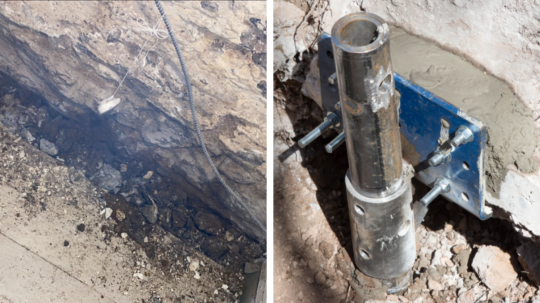
Common repair and stabilization methods can include carbon fiber reinforcement, steel supports, wall anchors, or other foundation stabilization systems.
Carbon Fiber Reinforcement
Carbon fiber reinforcement can be used in certain foundation wall repair situations to help stabilize cracked or bowing walls.
The carbon fiber material is installed over the affected area and provides additional tensile strength to help resist further movement.
Carbon fiber is not the right solution for every foundation wall. The condition and amount of movement should be evaluated before selecting this method.
Steel Beams and Wall Bracing
Steel supports can provide additional reinforcement for certain bowing foundation walls.
The appropriate system depends on the condition of the wall, the amount of movement, and the available space inside the basement or crawl space.
Wall Anchors
Wall anchors are another option that may be used to provide lateral support to a foundation wall.
These systems can be appropriate in certain situations where the wall is being pushed inward by outside soil pressure.
The site conditions and foundation construction need to be considered before selecting an anchor system.
Foundation Stabilization and Underpinning
In some cases, wall movement may be connected to broader foundation movement or settlement.
When this happens, stabilizing the foundation may be part of the repair plan.
Underpinning and other foundation stabilization methods are designed for specific structural conditions and should be selected based on an evaluation of the property.
Drainage and Waterproofing
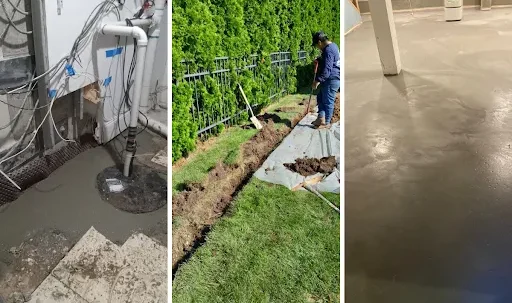
If water is contributing to pressure against the foundation, drainage or waterproofing may also be necessary.
The goal is to reduce water-related problems around the foundation while addressing the structural condition of the wall.
It is important to understand that waterproofing alone does not necessarily repair a severely bowing foundation wall. Structural movement and water problems may require separate or combined solutions.
Can a Bowed Foundation Wall Be Straightened?
This is one of the most common questions homeowners have.
The answer depends on the condition of the wall.
Some repair systems are designed primarily to stabilize a wall and prevent additional movement. They may not return a significantly bowed wall to its original position.
In other situations, more extensive structural work may be considered.
This is why it is important to distinguish between stabilizing a foundation wall and straightening a foundation wall.
The appropriate solution depends on how much the wall has moved, the cause of the movement, and the condition of the foundation.
How Much Does Bowing Foundation Wall Repair Cost?
The cost of bowing foundation wall repair can vary considerably from one property to another.
There is no single price that applies to every bowed foundation wall.
Some of the factors that can affect the cost include:
- Length of the affected wall
- Amount of bowing
- Type of foundation
- Severity of cracking
- Repair method
- Number of reinforcement points
- Accessibility of the foundation
- Excavation requirements
- Drainage work
- Additional foundation stabilization
A wall that needs a limited reinforcement system may require a very different repair than a severely displaced wall that needs extensive structural work.
For this reason, an inspection is important before estimating the cost of repairing a bowed foundation wall.
Bowing Foundation Wall Repair vs. Foundation Replacement
A bowing wall does not automatically mean that the foundation needs to be replaced.
Depending on the condition of the wall, stabilization or reinforcement may be possible.
Foundation Wall Repair
Repair or stabilization may:
- Address structural movement
- Reinforce the existing wall
- Help prevent additional movement
- Be less invasive than complete replacement in some situations
Foundation Replacement
Foundation replacement is a much larger construction project. It may be considered when the existing foundation is severely damaged or when repair is not a practical solution.
The right choice depends on the actual condition of the foundation rather than simply the presence of a crack or bow.
Can You Repair a Bowing Foundation Wall Yourself?
Homeowners can monitor foundation cracks and take steps to reduce water around the foundation, but structural foundation movement is not usually a good DIY repair project.
Filling a crack with sealant or applying a coating may improve the appearance or help with a minor water problem, but it does not necessarily stop the force causing the wall to move.
If the wall is visibly bowing, bulging, or continuing to move, it is better to have the condition evaluated before attempting a repair.
How Can You Prevent Foundation Bowing?
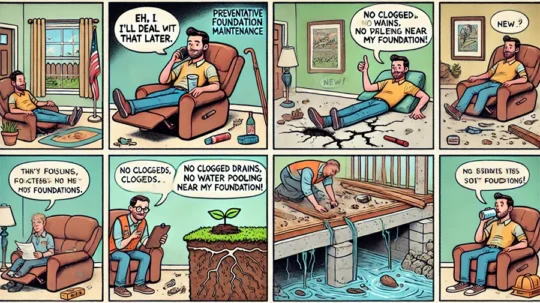
You cannot prevent every foundation problem, but good drainage and regular maintenance can help reduce some of the conditions that contribute to foundation movement.
Homeowners should:
- Keep gutters clean and working properly
- Make sure downspouts direct water away from the foundation
- Maintain proper grading around the home
- Address standing water near foundation walls
- Maintain drainage systems
- Watch for new or changing foundation cracks
- Address water intrusion promptly
These steps can help reduce water-related pressure around the foundation.
When Should You Have a Bowing Foundation Wall Inspected?
Consider having your foundation evaluated if you notice:
- A foundation wall bowing inward
- Horizontal foundation cracks
- A bulging wall
- Cracks that are getting larger
- Visible movement or displacement
- Water entering through foundation cracks
- Uneven floors
- Doors or windows that suddenly stick
- Multiple foundation problems occurring at the same time
You do not need to wait until the wall has severe movement before having it inspected.
An early evaluation can help identify the cause and determine whether the wall needs monitoring, reinforcement, stabilization, drainage work, or another repair solution.
Bowing Foundation Wall Repair in Long Island, Brooklyn and Queens
A bowing foundation wall can have different causes, so the repair should be based on the condition of the property rather than a one-size-fits-all solution.
Foundation Concrete Repair provides foundation repair and stabilization services for homeowners dealing with foundation movement, cracks, water problems, and other structural concerns throughout Long Island, Brooklyn, and Queens.
If you have noticed a bowing foundation wall, horizontal cracks, or other signs of foundation movement, a professional evaluation can help determine what is causing the problem and what repair options may be appropriate.
Concerned about a bowing foundation wall? Contact Foundation Concrete Repair to schedule an evaluation.
Frequently Asked Questions About Bowing Foundation Walls
Why is my foundation wall bowing?
A foundation wall can bow because of pressure from surrounding soil, water buildup, poor drainage, changing soil conditions, or deterioration of the foundation. The specific cause needs to be evaluated at the property.
What causes a foundation wall to bow?
Soil pressure is one of the main factors. Water-saturated soil, poor drainage, changing soil conditions, and foundation deterioration can also contribute to foundation bowing.
Is a bowing foundation wall dangerous?
The seriousness depends on the amount of movement, the condition of the wall, and whether the movement is continuing. A visibly bowing wall should be evaluated rather than treated as a cosmetic issue.
Can a bowed foundation wall be repaired?
Yes. Depending on the condition of the wall, repair or stabilization options may include carbon fiber reinforcement, steel supports, wall anchors, or other structural solutions.
How do I repair bowed foundation walls?
The appropriate repair depends on the cause and severity of the movement. A foundation evaluation can help determine whether reinforcement, stabilization, drainage work, or another solution is appropriate.
Can a bowing foundation wall be straightened?
In some situations, structural correction may be possible. However, many repair systems are designed primarily to stabilize the wall and prevent additional movement rather than completely straighten it.
How much does bowing foundation wall repair cost?
The cost depends on factors such as the amount of movement, wall length, foundation type, repair method, accessibility, and whether additional drainage or stabilization work is needed.
What is the best way to repair a bowing foundation wall?
There is no single repair method that is best for every wall. The right solution depends on the cause, severity, foundation type, and site conditions.
Author

Related Posts