A concrete slab can look strong and solid for years, so it can be surprising when you notice that part of your driveway, patio, walkway, garage floor, or other concrete surface has started to sink.ways, sidewalks, patios, garage floors, and other concrete surfaces.
Water and Soil Erosion
Water is another common cause of sinking concrete.
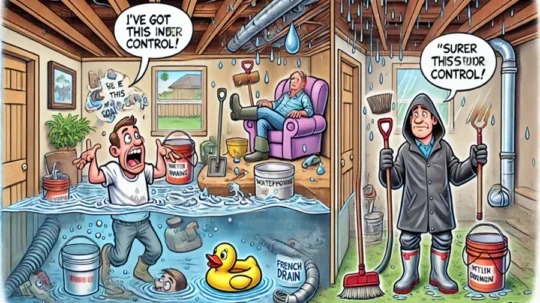
Heavy rain, leaking pipes, poor drainage, or water flowing toward the slab can wash soil away from underneath the concrete. Over time, this can leave empty spaces beneath the slab.
Without enough support underneath, sections of the concrete can begin to settle.
This is one reason it is important to look at drainage when dealing with a sinking slab. Simply lifting the concrete may not solve the problem if water continues to remove or weaken the soil underneath.
Natural Soil Settlement
Soil can change over time. The weight of the concrete and anything above it can cause loose soil to compress gradually
You may notice an uneven surface, cracks, gaps along the edges, or water collecting in one area after rain. In some cases, the change happens slowly and is easy to ignore. In others, the slab can settle enough to create a noticeable slope or trip hazard.
So, why is my concrete slab sinking?
In most cases, the problem starts underneath the concrete. Soil can settle, wash away, or change over time. When the soil no longer provides even support, the concrete above it can sink.
The good news is that a sinking concrete slab does not always need to be removed and replaced. Depending on the condition of the concrete and the cause of the settlement, concrete lifting and leveling may be an option.
What Causes a Concrete Slab to Sink?
Concrete itself is usually not the reason a slab sinks. The problem often comes from the soil or material supporting it.
Poorly Compacted Soil
When a concrete slab is installed, the soil underneath it needs to be properly prepared and compacted. If the soil was loose or was not compacted well during construction, it can compress over time.
As the soil becomes more compact, the space supporting the concrete becomes lower. The slab then settles into that space.
This can happen with drive.
Some settlement may be minor, but uneven settlement can cause a slab to move more in one area than another. This is when homeowners may start noticing cracks, slopes, or gaps.
Soil Expansion and Contraction
Changes in moisture can also affect the soil beneath concrete.
When soil becomes wet, some types of soil can expand. During dry conditions, the soil can shrink. Repeated changes in soil moisture can affect the support beneath a concrete slab.
Seasonal changes can also affect soil conditions. Foundation Concrete Repair notes that changing moisture levels and seasonal conditions in Long Island can contribute to soil movement and settlement problems.
Poor Drainage
A slab may also sink when water is not properly directed away from the property.
For example, a clogged gutter or poorly positioned downspout can send a large amount of water toward the ground beside a driveway or walkway. Over time, this can saturate the soil or contribute to erosion.
Correcting drainage problems can therefore be an important part of addressing concrete settlement.
Tree Roots and Changes Around the Property
Trees and landscaping can also affect the soil around a concrete slab. Roots can change soil conditions, while changes in grading or landscaping can redirect water toward the concrete.
The cause is not always obvious from looking at the surface. That is why an inspection can be useful when a slab continues to settle.
What Are the Signs That a Concrete Slab Is Sinking?
A sinking slab does not always look dramatically damaged. Sometimes the first sign is a small change in the level of the concrete.
Common signs include:
- An uneven or sloping surface
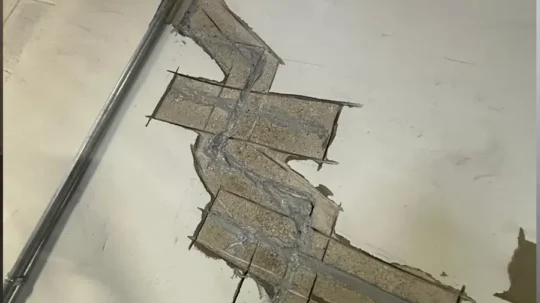
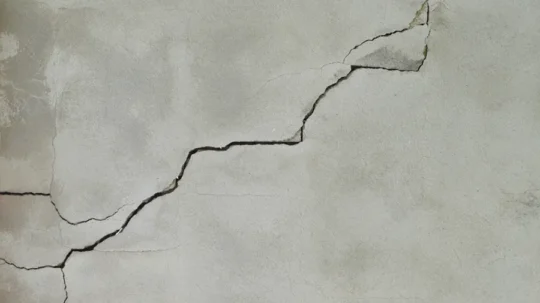
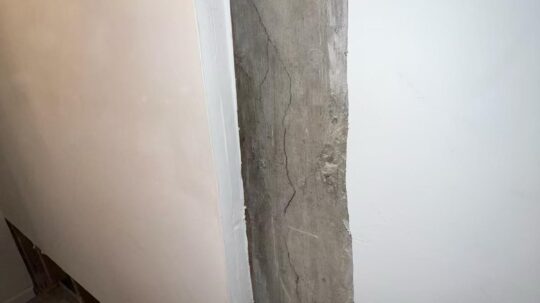
- Cracks across the concrete
- Gaps between the slab and nearby surfaces
- Water pooling after rain
- A driveway or walkway that appears lower in one area
- Steps that no longer line up properly
- A noticeable trip hazard
You may also see a gap develop underneath part of the slab. This can indicate that soil has been lost or compressed below the concrete.
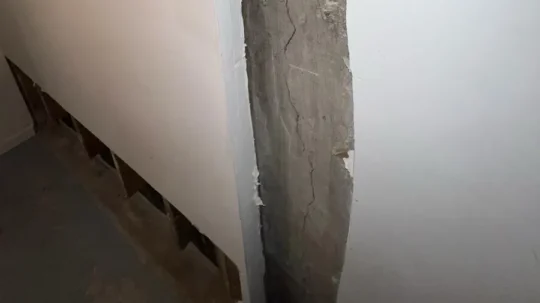
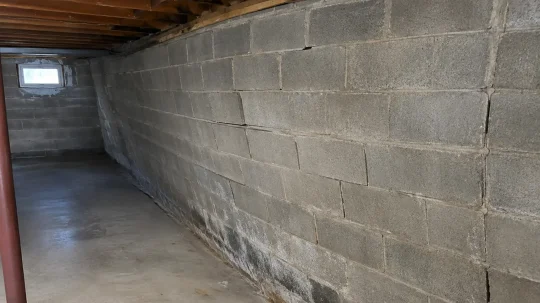
If the problem is close to your home, it is also worth checking for other signs of foundation movement, such as uneven floors, foundation cracks, or doors and windows that have become difficult to open or close. These symptoms can have different causes, so they should not automatically be blamed on a sinking slab.
Is a Sinking Concrete Slab a Serious Problem?
A small amount of settlement does not necessarily mean that your home has a major foundation problem.
However, a sinking slab can become a bigger issue if the underlying cause is not addressed.
Uneven concrete can create a trip hazard and may allow water to collect where it should not. Continued soil erosion or settlement can also cause the slab to move further.
If the concrete is next to your home’s foundation, significant settlement may also be connected to drainage or soil problems around the structure.
The important thing is to determine why the concrete is sinking, rather than simply covering the visible damage.
Can a Sinking Concrete Slab Be Fixed?
In many cases, yes.
The right repair depends on the condition of the concrete and what is happening underneath it. If the slab is still in suitable condition but has settled because of voids, soil movement, or loss of support, concrete lifting and leveling may be considered.
Concrete lifting is different from simply pouring more concrete over the existing surface. The goal is to correct the position of the existing slab and improve its support.
Foundation Concrete Repair provides concrete lifting and leveling services for uneven and sunken concrete in New York. Its service page identifies problems such as sinking concrete, water pooling, and uneven surfaces as common reasons homeowners seek this type of repair.
What Is Concrete Lifting?
Concrete lifting is a process used to raise sunken concrete closer to its original level.
Depending on the project, a lifting material or support system can be used beneath the slab. The method selected depends on factors such as the amount of settlement, the condition of the concrete, the soil underneath, and the location of the slab.
The goal is not simply to make the surface look level. A proper repair should also consider why the slab moved in the first place.
For some slab settlement problems, methods such as slab jacking or polyurethane foam injection may be used. Foundation Concrete Repair also identifies slab piers and other stabilization methods for different foundation and slab conditions.
How Does Concrete Lifting Work?
The process starts with an inspection.
A contractor looks at the condition of the concrete and checks for signs of settlement, voids, drainage problems, soil erosion, or other causes. This helps determine whether the existing slab can be lifted or whether another repair is more appropriate.
If lifting is suitable, access is created beneath the affected area. The selected material or support system is then used to raise the slab toward the desired level.
The amount of lifting needs to be controlled carefully. Raising concrete too quickly or too far can cause additional damage.
Once the slab has been brought back toward the correct level, the surrounding area is checked to make sure the repair addresses the underlying problem as well as the visible settlement.
Concrete Lifting vs. Concrete Replacement
A sinking slab does not automatically mean that you need a completely new slab.
Concrete lifting may be suitable when the existing concrete is still in usable condition but has settled because of problems underneath it. It can allow the existing slab to remain in place while correcting the uneven surface.
Concrete replacement may be necessary when the concrete itself is badly cracked, broken, deteriorated, or otherwise unable to provide a suitable surface.
The decision should be based on the actual condition of the concrete and the reason for the settlement.
Replacing the slab without addressing an underlying drainage or soil problem may also leave the new concrete exposed to the same conditions.
What Types of Concrete Can Be Lifted?
Concrete lifting can be considered for several types of sunken concrete, including:
- Driveways
- Sidewalks
- Walkways
- Patios
- Garage floors
- Some concrete slabs around a home
However, not every concrete surface can or should be lifted. The condition of the slab and the cause of the settlement need to be evaluated first.
For structural foundation settlement, a different repair method may be required. Foundation Concrete Repair’s existing guidance, for example, distinguishes slab repair from more extensive foundation stabilization methods such as underpinning and piering.
Can You Fix a Sinking Concrete Slab Yourself?
It can be tempting to fill a crack, add another layer of concrete, or fill a gap and assume the problem is solved.
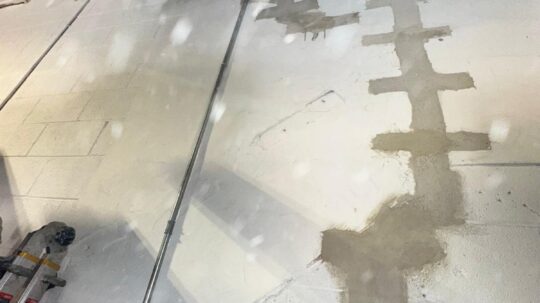
These repairs may improve the appearance temporarily, but they do not necessarily correct the reason the slab sank.
If soil has washed away or compressed underneath the concrete, the underlying support is still missing. The slab may continue to move.
Before deciding how to repair a sinking slab, it is better to determine whether the problem is related to soil, water, drainage, construction, or another condition.
How Can You Prevent Concrete From Sinking?
Good drainage is one of the most important things you can do to protect concrete and the soil underneath it.
Keep gutters and downspouts in good condition and make sure water is directed away from the slab and foundation. Watch for areas where water regularly collects after rain.
It is also a good idea to pay attention to small changes in the concrete. A small crack, developing gap, or slight slope may be easier to address before the settlement becomes more extensive.
If you notice repeated water problems around your property, correcting the drainage issue can be just as important as repairing the concrete.
When Should You Call a Concrete Lifting Professional?
Consider having the concrete inspected if the slab is continuing to sink, has developed significant cracks, or is creating a safety hazard.
You should also have the area checked if water is pooling around the concrete or if the settlement is close to your home’s foundation.
A professional can determine whether the problem is limited to the concrete slab or whether it points to a larger soil, drainage, or foundation issue.
Foundation Concrete Repair provides foundation inspections and assessments for properties in Long Island, Brooklyn, and Queens and evaluates issues such as settlement, cracks, uneven floors, and moisture problems.
Sinking Concrete in Long Island, Brooklyn, and Queens
Concrete settlement can happen for different reasons, and local soil and weather conditions can play a role.
Homeowners in Long Island, Brooklyn, and Queens may deal with changing soil moisture, heavy rain, drainage problems, and seasonal changes that can affect soil conditions around a property. Foundation Concrete Repair serves these areas with foundation and concrete repair services.
If your driveway, walkway, patio, or other concrete surface is sinking, finding the cause is the first step toward choosing the right repair.
Frequently Asked Questions About Sinking Concrete
Why is my concrete slab sinking?
A concrete slab can sink because the soil underneath it has settled, was poorly compacted, or has been washed away by water. Drainage problems, changing soil conditions, and other site conditions can also contribute to settlement.
Can a sinking concrete slab be lifted?
In some cases, yes. If the existing concrete is in suitable condition, concrete lifting can raise the slab and correct uneven areas. The appropriate repair depends on the condition of the concrete and the cause of the settlement.
How does concrete lifting work?
Concrete lifting uses a selected material or support system beneath a settled slab to raise it toward a more level position. The method depends on the slab, soil conditions, amount of settlement, and location.
Is concrete lifting better than replacing concrete?
Neither method is right for every situation. Lifting may be suitable when the existing concrete is still in good enough condition but has settled. Replacement may be needed when the concrete itself is badly damaged.
Can water cause a concrete slab to sink?
Yes. Water can wash soil away from beneath a slab or change the condition of the supporting soil. Poor drainage can therefore contribute to concrete settlement.
How do I know if my sinking slab is a foundation problem?
A sinking driveway, patio, or walkway does not automatically mean your home’s foundation is failing. However, settlement near the foundation combined with foundation cracks, uneven floors, sticking doors, or water problems should be evaluated by a professional.
Author

Related Posts